Sacred Ruins: The Desecration of Lord Vishnu and Cambodia’s Holy Sites
12 / 26 / 2025 · 497 words
The ongoing border conflict has claimed lives, destroyed schools, and displaced hundreds of thousands. But in late December 2025, the war took a deeply personal and spiritual turn. Recent evidence and widely circulated footage have confirmed that the destruction goes far beyond military targets, reaching into the heart of the region's shared religious heritage.
1. The Demolition of Lord Vishnu
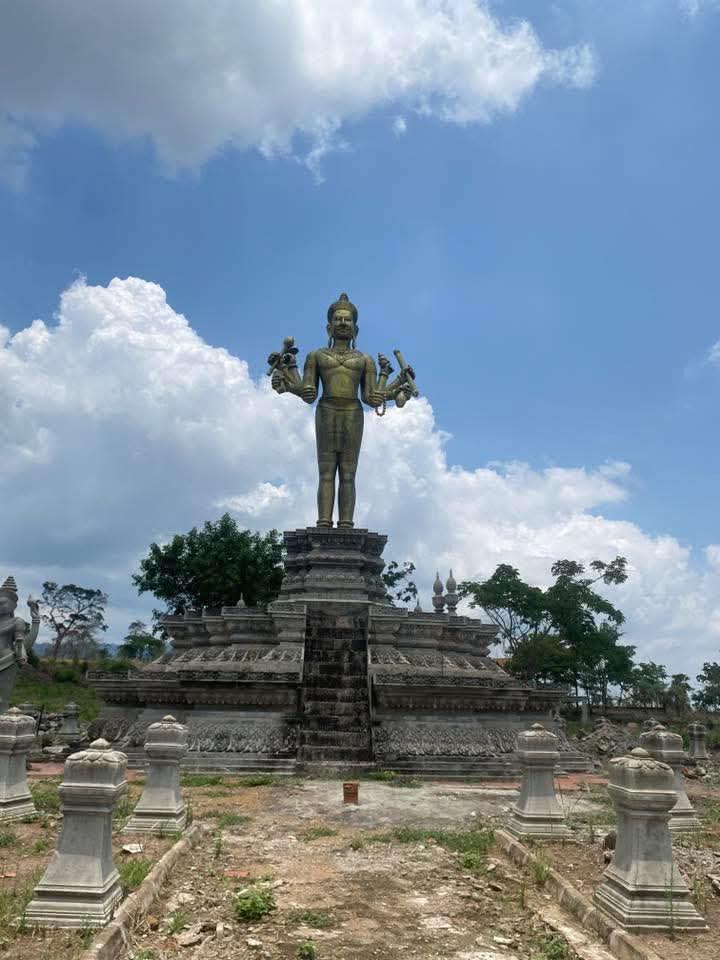
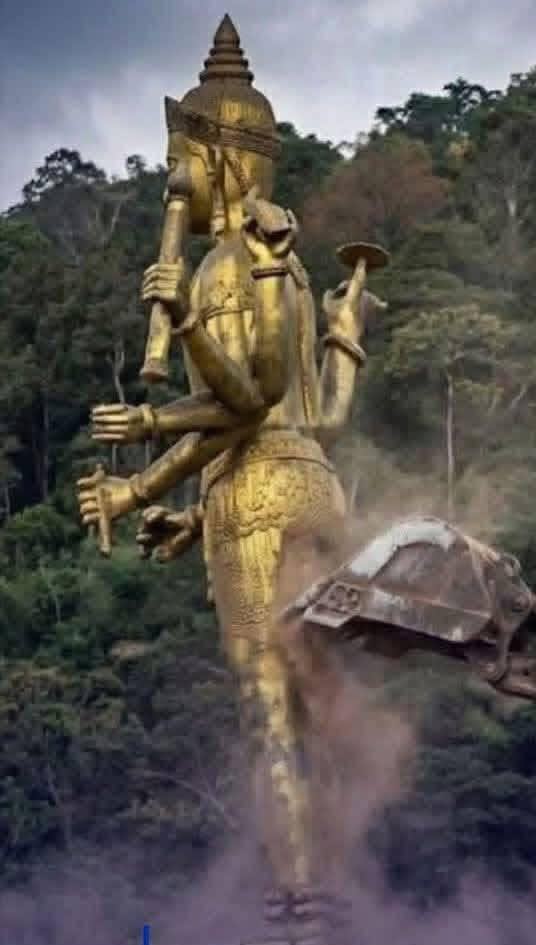
On December 22, 2025, a Thai military backhoe loader was filmed demolishing a large statue of Lord Vishnu in the An Ses area of Preah Vihear province.
- The Location: While Thailand claimed the removal was for "security considerations" in a disputed area, mapping data and Cambodian officials confirm the statue stood nearly 400 meters inside Cambodian territory.
- The "Decorative" Defense: The Thai government described the statue as a "merely decorative piece". For millions of followers, however, this was a site of active worship built in 2014.
2. A Systematic Attack on Faith
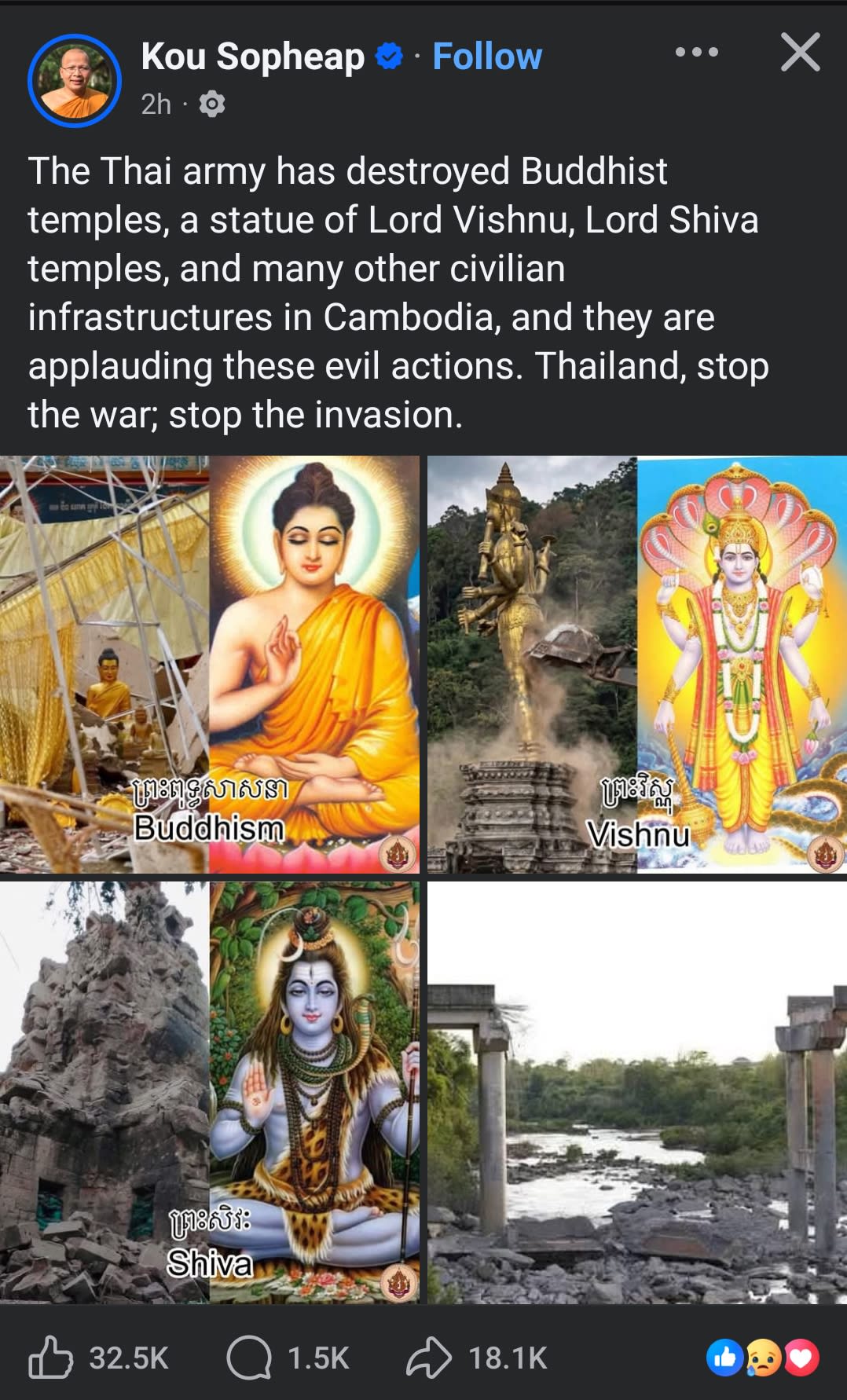
Evidence suggests the Vishnu statue was just one part of a broader campaign of desecration. High-ranking religious figures and local reports, including those from Venerable Kou Sopheap, highlight a pattern of "evil actions" targeting multiple faiths.
- Lord Shiva Temples: Reports indicate that temples dedicated to Lord Shiva have also been damaged or destroyed in the border regions.
- Buddhist Sanctuaries: In addition to Hindu icons, multiple Buddhist temples and monasteries have been targeted. On December 24, shelling caused direct damage to the Chan Deang pagoda in Battambang's Sampov Loun district.
3. Global Condemnation
The desecration has drawn sharp rebukes from the international community:
- India’s Outrage: The Indian Ministry of External Affairs stated that such "disrespectful acts hurt the sentiments of followers around the world" and urged a return to diplomacy.
- Cambodian Ministry of Cult and Religion: The ministry condemned the "brutal act," noting that it hurts religious believers globally and destroys the "common cultural heritage of humanity".
4. The Human and Spiritual Cost
From a "Human OS" perspective, destroying a community's sacred symbols is a form of psychological trauma. When these statues fall, the sense of spiritual protection for the hundreds of thousands of displaced civilians—including 203,593 children—falls with them.
"A destroyed statue cannot compare to soldiers' lives," claimed Thai officials. But for those in the trenches, these statues represented the peace they are desperately praying for.
Conclusion: Protecting the Sacred
Territorial disputes must be settled through dialogue, not the demolition of deities. We call on UNESCO and the international community to hold all parties accountable to the 1954 Hague Convention for the protection of cultural property in the event of armed conflict.
Reported from Battambang, December 26, 2025.